

Oil & Gas in 2026: Energy Policy & Regulation
Shifting Political Dynamics Around Energy Infrastructure
This article is part of the "Oil & Gas in 2026: Emerging Trends & Predictions" report. For the full report, click here.
We expect the Federal Energy Regulatory Commission (FERC) to play a pivotal role in formalizing and institutionalizing many of the Administration’s policies around energy dominance, including the integration of large loads into the bulk energy system and focus on pipeline infrastructure as a way to increase electric reliability and foster energy exports. These are some of the priorities outlined by FERC’s newest Chairman, Laura Swett, who began serving in her role at the end of October 2025.
A former member of FERC staff, Swett’s background may help her secure bipartisan support as the agency faces questions over challenges both to its jurisdiction and because of the need to address unprecedented demand growth driven by AI, data centers and electrification. Swett has warned that unmet demand could force data centers abroad, creating national security and economic risks, and has vowed to prioritize connecting and powering data centers as quickly and as durably as possible.
With electricity pricing likely to be a key issue in the midterm elections in 2026, energy infrastructure and permitting reforms are being championed by Democrats adopting an affordability lens. In turn, the climate change agenda has been deprioritized as the new administration has heralded a dramatic reduction in federal support for wind and solar energy, and especially offshore wind projects.
The need for affordable energy, surging energy demand and historically high electricity prices have resulted in more openness among the political leaders in northeastern states towards pipeline infrastructure that can supply natural gas to the region. The Williams Company is using this moment to revitalize two pipeline projects that were previously unable to obtain key Clean Water Act permits from the State of New York, the Transcontinental Gas Pipeline Northeast Supply Enhancement Project and the Constitution Pipeline.
Other pipeline companies are planning projects in regions of the country that have not had new large greenfield projects in decades, such as the southwestern U.S., and FERC is turning applications noticeably quicker than in prior years, despite losing as much as 10% of its staff in 2025.
As permitting moves up the agenda, FERC is considering creating blanket authorizations for certain LNG and hydroelectric projects in an effort to simplify and expedite processes. However, the agency’s rules and decisions will need to stand up in court, and as more infrastructure is constructed, the age-old questions of who benefits and who pays will persist. On the pipeline front, negotiated agreements create some measure of predictability, but with new shippers comes new opportunities for friction, which could keep the federal courts busy in 2026, including discussions on whether FERC has properly considered the cost and reliability impacts for existing customers when approving projects.
Spotlight on Grid Reliability
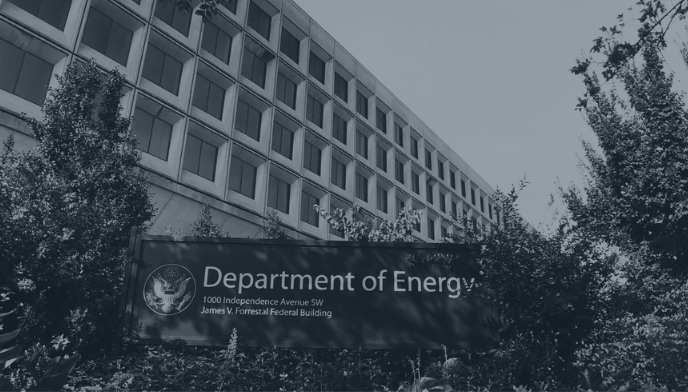
Grid reliability is a big issue for U.S. energy regulators as power demand surges. In April, President Trump issued an Executive Order (EO) directing the Department of Energy (DOE) to expand the use of its emergency authority to require the retention of generation resources deemed necessary to meet power needs. That EO implied a more active role for the DOE in overseeing and supporting grid adequacy, potentially encroaching on the jurisdiction of both FERC and state regulators.
More recently, in October FERC was directed by the DOE to assert jurisdiction over large load interconnections to the bulk electric transmission system and establish standardized procedures for their interconnection. Asserting jurisdiction over large loads would mark a change for FERC which historically focused on generator interconnections, deferring to state regulators on load interconnections as they relate to retail sales.
We expect the jurisdictional debate to play out through 2026, with the oil & gas industry possibly moving away from the sidelines and towards the center of policy development due to the growing demand for onsite electricity generation for data centers, and the creation of private pipeline and transmission networks to provide that service.
We are seeing a shift in data center locations away from areas with the lowest latency in favor of sites near natural gas basins where energy can easily be produced. While supply chain constraints for natural gas turbines threaten to impact investments, developers should benefit from the efforts of both FERC and the DOE to cut red tape and speed up approvals.
The Push to Expand LNG Exports
2026 will continue to see movement towards an expansion of U.S. LNG exports following the Trump administration’s decision in January 2025 to make them a priority.
In October, the DOE issued a final order granting Venture Global permission to export up to 1,446 billion cubic feet per year of domestically produced LNG from Louisiana to non-FTA countries. The DOE order cited a 2024 study that found that the U.S. has sufficient natural gas supply to satisfy both domestic consumption and export demand, though questions remain about the impact of export policies on domestic gas prices. The DOE also cast aside previously raised environmental concerns.
The final order signals the DOE’s commitment to advancing U.S. LNG export infrastructure under a streamlined regulatory framework. It does not indicate that framework will place any emphasis on greenhouse gas emissions and environmental justice community impacts, which were hallmarks of DOE policy under former President Biden.
Venezuela
The Administration is bullish on the opportunities for the U.S. energy industry in Venezuela and eager to support companies willing to navigate the political risk inherent in the operations at the moment. Early meetings with President Trump and industry leaders showed the path forward may be longer and more complex than anticipated by the President.
While the DOE and National Energy Dominance Council are focused on Venezuela, various parts of the Administration have activated and taken on new and expanded roles in the Venezuelan energy transition—especially the U.S. International Development Finance Corporation, the Export-Import Bank, and the Department of War Office of Strategic Capital. Companies have a unique opportunity to shape the future of the industry in Venezuela.
Venezuela’s National Assembly has introduced a proposed reform to the Organic Hydrocarbons Law that would significantly reshape the country’s oil & gas operating environment. The draft would expand the role of private operators, enhance contractual flexibility, and grant the Executive Branch broader authority to structure projects and set the terms for Mixed Companies. Key elements include the potential for reduced royalty rates, greater operational autonomy for private partners, and new mechanisms for PDVSA to contract with private companies, lease assets and assign project areas. The reform, which the government has indicated it intends to adopt, would meaningfully modernize the investment framework at a moment when the Administration is actively encouraging U.S. companies to re‑enter the Venezuelan market.
Conclusion
The new administration is very clear on its energy policy direction and permitting reform is likely to remain a big issue for the coming year. We will continue to see the pendulum swing as we move from one policy regime to the next and there will be disparate treatment of energy technologies as fossil fuel projects are favored over renewables.
LNG infrastructure development and export capabilities will be top of mind for U.S. energy policymakers in 2026 just as they have been through 2025. We expect fewer FERC enforcement efforts and an ongoing discussion about the agency’s ability to assert independence in the face of White House challenge.