
2014 Year-End Energy Briefing

Jan 15, 2015

Reading Time : 2 min

The Future of the Wind Industry

Burdick: Our first presenter is Ed Zaelke, a partner and chair of the Global Project Finance practice, who will lead a discussion about the future of wind energy.

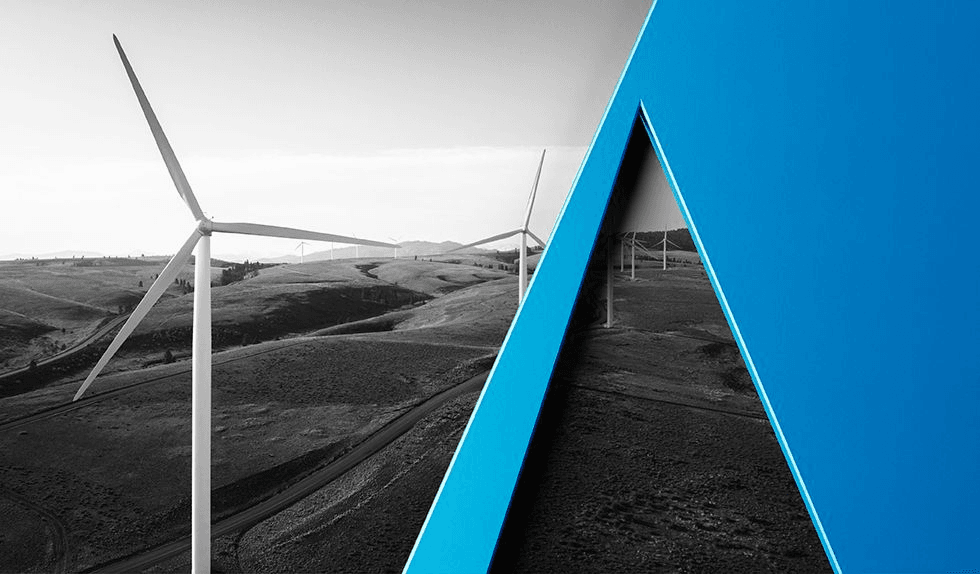
Zaelke: The statistics for U.S. cumulative wind power capacity growth reflect an increase from 4,147 megawatts in 2001 to a current level of 62,300 megawatts of installed capacity. The current installed capacity of wind is about 6 percent of the country's power mix. With the exception of the Southeast, online wind capacity is distributed across the country. Sixteen states now have more than 1,000 MW of installed wind, with Texas currently in the lead at nearly 13,000 MWs. We will see a 20 percent increase over the current capacity in the next 12 months. In order to qualify for production tax credits, current legislation requires that wind construction projects had to be started in 2013 and completed by the end of 2015, so there is a big bubble of wind projects scheduled for completion in 2015.

Why the growth in wind? There has been a constant decrease in the levelized cost of energy (LCOE) from wind, with a 58 percent decrease in the past five years. This was not anticipated. The prevailing wisdom, as of 2007-2008, was that all new technology already had been put into wind. However, with the Obama administration in place, wind R&D seemed a safe investment, resulting in cost-saving design and technology improvements. Further, with a shift into U.S. manufacturing, meaning “away from Europe,” manufacturing and transportation costs are much less. Finally, as wind becomes more mainstream, the cost of capital has decreased.

Layering decreasing costs over a $23 per megawatt-hour production tax credit (PTC) means that wind is running at about $20 per megawatt-hour going forward, based upon contracts that were signed in 2013. But if you take away the PTC credit and then layer on that effect for 10 years, prices will increase by $25 or $30 – close to the cost of producing electricity from natural gas. In the battle to determine the nation’s energy mix, and we assume a certain reduction of energy produced by coal and nuclear plants, the wind folks fear that gas will be the winner if the PTC goes away. Thus, the wind industry is pushing for an extension of the PTC, which will keep the industry running while it is continuing to make further efforts to lower the LCOE.

Share This Insight

Previous Entries

Speaking Energy

March 10, 2026

Federal energy regulators are assuming expanded roles as the administration prioritizes energy dominance and infrastructure development to meet unprecedented power demand. FERC Chairman Laura Swett has vowed to expedite data center interconnections while addressing jurisdictional challenges, warning that unmet electricity demand could drive data centers abroad and create national security risks. The agency is processing pipeline applications faster than in prior years and considering blanket authorizations for certain LNG and hydroelectric projects to streamline approvals. 

Pipeline projects previously stalled by Clean Water Act permits are being revitalized, particularly in northeastern states where historically high electricity prices have increased openness to natural gas infrastructure. The Department of Energy is expanding its emergency authority to require retention of generation resources and has granted major LNG export approvals, signaling commitment to expanding U.S. export capacity under a streamlined framework that deprioritizes climate considerations.  

The Administration is bullish on the opportunities for the U.S. energy industry in Venezuela and eager to support companies willing to navigate the political risk inherent in the operations at the moment. Early meetings with President Trump and industry leaders showed the path forward may be longer and more complex than anticipated by the President. 

As permitting reforms advance and the pendulum swings toward fossil fuel favorability, the regulatory and policy landscape is fundamentally reshaping energy infrastructure development timelines and investment opportunities. 

Oil & Gas in 2026: Energy Policy & Regulation 

Delve into the complete regulatory & policy outlook at our Oil & Gas in 2026 report.

...

Read More

Speaking Energy

March 3, 2026

Macroeconomic turbulence and volatile commodity markets significantly influenced oil & gas M&A activity throughout 2025, with deals showing renewed momentum only in the year's second half.  

...

Read More

Speaking Energy

February 24, 2026

On February 19, 2026, the Federal Energy Regulatory Commission (FERC) issued an order rescinding the soft price cap for bilateral spot market energy sales in the Western Electricity Coordinating Council (WECC) region.1 As previously covered, on July 15, 2025, FERC initiated a Federal Power Act Section 206 proceeding following the D.C. Circuit’s decision finding that FERC must apply the Mobile-Sierra public interest standard before ordering refunds for above-cap bilateral sales and vacating FERC’s orders requiring refunds for certain bilateral spot market transactions in the WECC region that exceeded the $1,000 MWh soft price cap.2 FERC’s Order follows through on the proposal it made last July to eliminate the WECCs soft price cap and marks a recognition that Western wholesale markets have evolved over the past two decades to become sufficiently competitive to render the soft price cap unnecessary.  

...

Read More

Speaking Energy

February 23, 2026

The oil & gas industry is experiencing a fundamental transformation in how companies access and deploy capital in 2026. Despite strong balance sheets and robust free cash flow generation, the sector is witnessing strategic shifts in funding sources and investment priorities that signal a new era of capital allocation.

...

Read More

© 2026 Akin Gump Strauss Hauer & Feld LLP. All rights reserved. Attorney advertising. This document is distributed for informational use only; it does not constitute legal advice and should not be used as such. Prior results do not guarantee a similar outcome. Akin is the practicing name of Akin Gump LLP, a New York limited liability partnership authorized and regulated by the Solicitors Regulation Authority under number 267321. A list of the partners is available for inspection at Eighth Floor, Ten Bishops Square, London E1 6EG. For more information about Akin Gump LLP, Akin Gump Strauss Hauer & Feld LLP and other associated entities under which the Akin Gump network operates worldwide, please see our Legal Notices page.