

Oil & Gas in 2026: The Next Chapter in the Energy Economy
Oil & Gas Companies Diversify Behind New Energy Policies
This article is part of the "Oil & Gas in 2026: Emerging Trends & Predictions" report. For the full report, click here.
Oil & gas companies are continuing to adjust from the meaningful swing in public policies between the prior U.S. presidential administration of President Biden and the second Trump administration, which entered office at the beginning of 2025. No longer beholden to a whole-of-government strategic goal to make the U.S. economy a net zero emitter by 2050, the industry is stepping front and center into the new policies to expand U.S. production and more rapidly allow the U.S. to influence the global oil & gas industry.
The emergence of “energy dominance” as a primary motivator driving deregulation efforts, combined with new regulations around tariffs and duties, creates both challenges and opportunities for the oil & gas industry with market forces and economic indicators intersecting with concerns around permit durability. On a macro level, time will tell how significant the impact of Venezuelan production and the U.S. influence on the revitalization of the same may have on the industry.
Energy Security & Dominance
In the run-up to his re-election, President Trump was outspoken about his intention to roll back many of the Biden era renewable energy legislative actions while putting a renewed focus on fossil fuel production. Through 2025, the administration increasingly highlighted the need for grid reliability to support U.S. competitiveness in artificial intelligence and digital infrastructure. There are also growing opportunities for oil & gas companies to support the drive to secure access to critical minerals, while benefiting from the government’s initiatives aimed at increasing liquefied natural gas (LNG) exports in support of the energy dominance agenda.
- Data Centers Present New Opportunities – Natural Gas-Fired Generation Is Back in Vogue: With the boom in AI driving demand for high-density, power-hungry data centers, the traditional grid increasingly looks like it will struggle to meet demand. The key to data center developments is access to reliable onsite power, with a focus on getting those power sources up and running as quickly as possible. In addition to the massive rush to obtain natural gas-fired generation equipment and assets, power solutions ranging from small nuclear reactors, extending the operational life of existing nuclear power plants, and increased investment in battery storage are also becoming more mainstream.
Traditional oil & gas companies are using their natural gas resources and their expertise building infrastructure to capitalize on new business opportunities and build facilities to serve new markets in the Southeastern and Southwestern U.S. where data center development is underway. We see both oil & natural gas producers and pipeline companies actively pursuing partnerships with data center developers, building dedicated natural gas-fired generation facilities and entering into infrastructure construction joint ventures as they move to capture the market opportunity.
On stepping up to chair the Federal Energy Regulatory Commission (FERC) in October 2025, Laura Swett outlined her priority to “ensure that our country can connect and power data centers as quickly and durably as possible.” The Department of Energy (DOE) is pushing for FERC to assert jurisdiction over the interconnection of large loads for data centers and expedite permitting, putting the issue top of the agenda for energy policymakers.
- Critical Minerals Supply Chains in Spotlight: Another key focus for the new administration has been securing supplies of the critical minerals essential for battery value chains and key industries like electronics, AI, aerospace, defense and renewable energy. With a particular spotlight on minerals like lithium, cobalt and other rare earths, some of the largest integrated oil companies are exploiting their expertise in subsurface exploration, drilling and large-scale project management to move into mining.
In 2025, the U.S. government signed offtake agreements with various rare earth companies and countries, while ExxonMobil was an early mover when it acquired drilling rights for lithium deposits in Arkansas in 2023. Since then, we have seen a growing migration of oil majors into the critical mineral space, to diversify away from fossil fuels and capitalize on new revenue streams. Several oilfield services companies have also sensed an opportunity to follow their clients into mining and processing for mineral supply chains.
- A Focus on LNG Exports: One of the Trump administration’s first actions on Inauguration Day was an executive order prioritizing LNG exports. The president immediately set out to lift the pause on issuing LNG export permits for trade with countries that do not have free trade agreements with the U.S., and to speed up both FERC and DOE permitting processes for exports.
Throughout 2025, we saw the government move to expedite permits for new LNG export terminals and support the build-out of midstream infrastructure necessary to supply feed gas with many new projects announced in Texas, Louisiana and other southeastern states to bring gas produced in Haynesville and Permian Basin to Gulf Coast terminals. President Trump is pushing the U.S., already the biggest LNG exporter in the world, to increase volumes, particularly to Europe, through the DOE and the White House’s National Energy Dominance Council created earlier in 2025. The efforts resulted in significant increases in LNG exports in the past year. Energy analytics firm Kpler reported that 10.7 million tons of LNG were exported in November 2025, a 40% increase from the same period in 2024, and the highest monthly figure ever exported by a single LNG-producing country.
Potential transformative projects in 2026 could include more infrastructure to unlock production in the Marcellus Basin in Appalachia as northeastern state opposition to pipeline infrastructure begins to soften and the need to meet increasing energy demands becomes more salient.
Decarbonization
The One Big Beautiful Bill Act, signed into law by President Trump in July 2025, signaled a hard shift from the public policies championed by former President Biden around decarbonization and renewable energy.
The legislation handicapped many of the energy tax credits passed into law in the 2023 Inflation Reduction Act and 2022 Bipartisan Infrastructure Law that supported the wind and solar industries, while retaining certain credits for carbon capture, sequestration & storage (CCS) and geothermal that are more aligned with fossil fuel company priorities. Without certain incentives for renewable energy, oil & gas companies with interest in expanding their business offerings are reassessing how to deploy capital within their new venture business units.
- Refocusing Away from Wind and Solar: The U.S. approach to supporting energy transition technologies evolved significantly in the past two years, with the previous administration’s plans for large-scale solar and wind buildouts replaced by a rollback of tax credits and frequently overturned executive actions aimed at delaying certain projects.
Offshore wind and solar projects, on federal land and offshore particularly, have been the biggest losers given their exposure to federal decision-making, with tariffs also imposed on solar panels imported from China. The policy shift is causing a rush for developers to complete projects by the end of 2027, in order to continue to qualify for existing credits. It is unclear what will happen to the wind and solar markets when developers cease benefiting from the previous rules in 2028, but as we have seen recently, the Trump administration has been willing to use its permitting authority to significantly impact the progress of these projects. As recently as December 2025, the Department of Interior issued a stop-work order to five offshore wind projects citing classified national security concerns. Courts have begun issuing decisions lifting the orders and allowing construction to continue.
So far, we have not seen signs of widespread distress or restructuring activity in wind and solar, with the projects still largely solid. A number of bankruptcies have occurred where solar developers have taken on too much debt at platform level, leading to distress, but the issues are not widespread.
- New Requirements Shape Tax Credit Policies: To quality for tax credits under the new policy framework, renewable energy projects must meet strict new requirements in relation to foreign ownership and sourcing. With the subsidies on offer still significant, we see developers reorienting supply chains to be compliant.
Technologies such as CCS, hydroelectricity, geothermal and nuclear power will continue to qualify for tax credits, but the process is much more strenuous than under the Biden administration. Further, a new category of credits for fuel cells and an extension for renewable transportation fuel is leading oil & gas producers to seek out opportunities to transact in those markets.
- Some Majors Deprioritize Transition Efforts: In line with the policy shift at the government level, several major players in the traditional hydrocarbon space that had previously directed their energies into transition opportunities appear to have pulled back from those.
Others continue to invest in CCS, hydrogen and fuel cells, recognizing that huge parts of the U.S. economy continue to seek out renewable energy to honor long-term commitments. The technology sector, in particular, increasingly favors renewables as the best means of powering AI development due to ease of construction, reliability and the availability of tax credits, presenting interesting opportunities for energy majors seeking to diversify around new revenue streams.
- Middle East Ramps Up Renewables Focus: In the Gulf states, national net zero commitments coupled with energy enhancement initiatives continue to drive a regional focus on renewable energy integration. In Abu Dhabi and Saudi Arabia, CCS, solar and hydrogen projects are all starting to take off, alongside a growing appetite for green financings to support transition initiatives.
In October 2025, Red Sea Global, a subsidiary of Saudi Arabia’s Public Investment Fund, closed a $1.73 billion green financing for AMAALA, a luxury wellness destination on the Red Sea coast that is key to the Kingdom’s 2030 Vision strategy.
Investment in New Technologies
Carbon Capture, Sequestration & Storage
Few CCS projects have final investment decision in the U.S., despite interest and effort in 2023 and 2024, and the 2025 changes to tax credits may do little to add market momentum.
That said, the CCA tax credit continues to receive relatively positive treatment at the federal level and remains available for carbon dioxide that is captured and then permanently sequestered, used in enhanced oil recovery or put to another commercial use. Each use case is on equal footing following OBBBA, effectively enhancing the incentives available to oil recovery and commercial use, which had previously received a lower credit than sequestration. CCS projects will continue to struggle, however, due to resistance at the state level.
Outside of the U.S., according to the Global CCS Institution, CCS advanced globally through 2025, with operational projects increasing 54% year-on-year and 27 new facilities coming online. In Europe, Heidelberg Materials’ Brevik cement plant in Norway became the first industrial facility with a full CCS value chain, while CCS projects are also scaling in the Middle East. ADNOC launched its Habshan CCS project in Abu Dhabi, aiming to capture and store 1.5 million tons of CO2annually, while Saudi Aramco continues to move forward with its CCS hub development at Jubail, aiming to capture and sequester 9 million tons per year.
Hydrogen
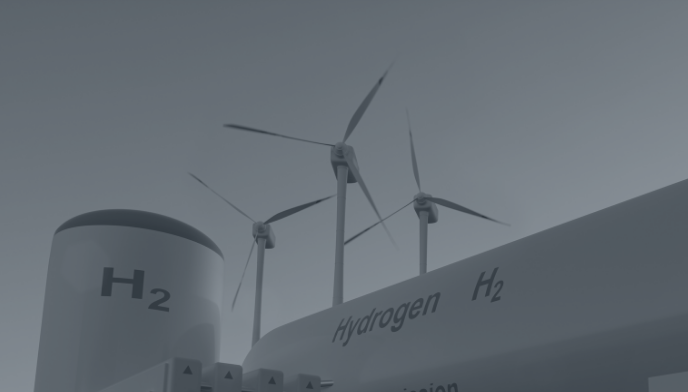
The deadline for beginning construction on clean hydrogen projects in order to qualify for tax credits was brought forward in the One Big Beautiful Bill Act, from 2032 to 2027. That has created meaningful headwinds, with ExxonMobil announcing in 2025 that it would postpone its flagship Baytown blue hydrogen and ammonia project as a result of weak customer demand.
In the Middle East, we have also seen green hydrogen projects scaled back and delays at the 2.2 GW NEOM green hydrogen project, under construction in northwest Saudi Arabia. That project has similarly struggled to find offtakers, though hydrogen remains crucial to Gulf export diversification strategies.
Renewable Natural Gas
Renewable natural gas markets saw strong growth through 2025 as rising industry demand and favorable government policies drove innovation and project launches. Projects often qualify for tax credits, with developers now investing to capture biogas from sources as diverse as food waste, landfill, farms and wastewater treatment plants.
E-methane is one renewable natural gas moving up the agenda in certain parts of the world, made by combining green hydrogen and captured carbon dioxide. Less valued in the U.S., it nevertheless presents an opportunity to obtain U.S. tax credits and is popular in Asia, where governments, including Japan and Korea, have established or are looking to establish contract-for-difference subsidy schemes.
Japan’s gas utilities are actively pursuing e-methane as an effective replacement for fossil fuels in light of a contract for difference structure being supported by the Government of Japan. Several are actively developing international e-methane projects in the U.S., Australia and Canada in response to this program and some have made public announcements regarding these projects. A press release was issued at the end of last year regarding the Live Oak Project in Nebraska, which identifies the project as a proposed joint venture between TotalEnergies, TES, Osaka Gas, Toho Gas and ITOCHU, aimed at producing 75,000 tons of e-methane for export to Japan annually.
Sustainable Aviation Fuel
High consumption sectors like shipping and aviation have been a growing focus for oil & gas companies pursuing energy diversification efforts, with several investing in sustainable aviation fuel (SAF) capabilities. These typically blend SAF with fossil fuels to reduce the overall carbon footprint and support the decarbonization goals set by the aviation sector.
The policy environment for SAF continues to move forward at pace. The One Big Beautiful Bill Act eliminated the increased tax credit rate of $1.75 per gallon for SAF, but the standard $1.00 per gallon credit remains available and applies to transportation fuels produced after December 31, 2025.
Elsewhere, the EU’s Refuel EU policy took effect at the start of 2025, requiring aviation fuel suppliers to ensure that all fuel made available to aircraft operators at EU airports contains a minimum share of SAF from 2025 and, from 2030, a minimum share of synthetic fuels. Those minimums will increase gradually until 2050. Further, Singapore is also now requiring all flights departing its airspace to be at least partially fueled by SAF starting in 2026.
U.S. SAF production capacity is growing quickly, albeit from a small base. A growing theme continues to be the conversion of refineries to produce SAF and other biofuel products, which we expect to gather pace in the coming year.
Geothermal Technology
Another low-carbon and renewable energy source that is growing in popularity is geothermal—tapping heat from within the Earth to generate electricity. Geothermal technology is not new but there are only limited parts of the world where it can be applied at scale, namely volcanic zones or hot springs. Several oil & gas companies are now exploring small-scale geothermal, leveraging innovations in drilling and production to power plants or neighborhoods.
Enhanced geothermal systems, or human-made geothermal energy, is the next frontier and has the potential to power more than 65 million American homes and businesses, according to the U.S. DOE. That technology works by injecting fluid deep underground, allowing it to circulate through fractured hot rock, and then pumping hot fluid to the surface to generate electricity.
For example, Fervo Energy continues to develop its Cape Station geothermal power generation project in Utah that will begin delivering 100 megawatts (MW) of clean power to the grid beginning in 2026, with an additional 400 MW by 2028 for a total of 500 MW.
Conclusion
The evolving policy environment created new revenue opportunities in 2025, and this bullish excitement will continue into 2026. While the prior administration’s mandates around renewable energy and environmental impacts are no longer at the forefront of decision-making, the incessant demand for more power, combined with the rapid increase in policies that flex U.S. energy resources onto the world stage, creates significant opportunities. As we enter 2026, the new landscape is taking shape, and the new policy priority of energy dominance has taken on a form that investors can get behind.
For oil & gas companies, three new revenue streams are now crystallizing as a result of the new administration’s policy, with clear opportunities rising in demand for natural gas-fired generation to fuel the need to satisfy the power needs for data centers, critical mineral supply chains and LNG exports.
At the same time, decarbonization has lessened, but not gone away as a thesis for many parts of the global economy. Though battery storage appears to be here to stay, wind and solar are out of favor and the new tax credit environment makes some renewable technologies more viable than others, there remain plenty of investment opportunities. In the Gulf states and parts of Europe, there remains a strong focus on renewable energy integration, while the technology sector increasingly sees renewables as the best means of powering the AI transition.
Capital discipline and razor-sharp strategic focus have driven oil & gas investment of late. Moving into the new year, it is clear that new energy policies present plenty of opportunities that industry leaders may wish to lean into.

Authors